Showing posts with label technology. Show all posts

Sunday, August 9, 2015

From "Let It Go" to "Let Her Code"

 If you’re like me and have 1 or more daughters under the age of 10, it’s highly probable that any of the following are true:
  • Despite not actually trying, you’ve committed the lyrics of the smash hit song “Let it Go” from the movie Frozen to memory and find yourself at odd times during the day humming it without realizing what you’re doing

  • You’ve yielded to your daughter’s plea to either throw a “Frozen-themed” party or, despite harboring doubts, went ahead and purchased her an Elsa costume complete with a golden-braided wig

Well, fellow parents of young daughters, I have a challenge for you. Give your daughters a Frozen gift that will last a lot longer than their Frozen pajamas or the plastic Frozen cups and dishware that are bound to melt when you mistakenly put them on the bottom rack of the dishwasher.

“Move Forward by 200 pixels…”

Have your daughter create a program that lets Elsa skate.

The lesson is part of Code.org’s Code Studio where anyone can learn how to create a simple computer program. Started in 2013, Code.org is a non-profit dedicated to expanding access to computer science, and increasing participation by women and underrepresented students of color.

On their site, after a catchy introduction to programming featuring Lyndsey – who is, yes, both a fashion model and a programmer – students can jump in and start creating instructions that help Elsa skate up a storm before their very eyes.


Last month, I wrote about sending my two daughters, ages 7 and 9, to an ID Tech Introduction to Robotics camp for a week. The good news is they loved it. I had written about my not-so-secret motivation of wanting to pique their interest in technology and programming given this is where the future jobs and money will be.  

Open, High-Paying Jobs

According to Code.org, by 2020 the U.S. job market will have 1.4 million computing-related jobs and only 400,000 computer science majors. Also, while 57% of bachelor degrees are earned by women, a mere 12% of all college computer science graduates are women.


Not only are technology jobs going to be both abundant and unfilled in the future, but they already are well-represented among the highest-paying jobs on the market. According to Glassdoor’s inaugural 25Highest Playing Jobs In Demand report, 14 are tech jobs, including Software Architect ($131,099 average base salary), Software Development Manager ($123,747), Solutions Architect ($121,522), Analytics Manager ($115,725) and IT Manager ($115,642).

The kicker is that most schools don’t have computer science classes. How weird is that? Per Code.org, computer science classes cannot count toward high school math or science graduation requirements in 26 of our 50 states. This seems so incredibly unwise and ridiculous, I think I could vomit.

Let Her Teach Herself

So, what to do? Parents, this is where you can jump in. Find a timely moment to interrupt your daughter’s play with her Elsa doll, sit her down in front of the computer (Elsa  gown and wig optional, of course) and let her teach herself how to code. After she masters the Elsa skating program (and she will), here are some other things to try:

  • Code.org – Through the site’s Code Studio there are also 20 1-hour classes on computer basics. There are also links to local classes as well.

Scratch
  • Scratch – This is a free program created at the MIT Media lab targeted for 8-16 year olds. Anyone can use it though. Scratch lets you program interactive stories, games and animations.

  • Codecademy – An online education company that teaches students how to code. It boasts that it’s helped millions to date. Take a minute to listen to their stories. They are pretty compelling. 

  • Harvard’s CS50 Course – This is a free course delivered via edX that, according to the course description is, an “introduction to the intellectual enterprises of computer science and the art of programming for majors and non-majors alike, with or without prior programming experience. An entry-level course taught by David J. Malan, CS50 teaches students how to think algorithmically and solve problems efficiently.”
    Codin Games
  • Play Coding Games – People like games. Kids love them. Games also can be a great way to learn programming skills as they offer very real-time feedback and rewards. Sites like Codin Games and CodeCombat are great for both boys and girls.


“Let Her Code…Let Her Code”

So, give those a shot. I will note that this fall, my wife and I are taking our daughters to Disney World. It will be a first for all four of us. As we stroll through all the wonder that is Disney, I am quite sure I’ll be thinking about a dozen years in the future when, perhaps, my post-college daughters are programming the next version of Disney’s mobile app or devising a new mobile e-payment system.

Perhaps even as a way to coax that vision into reality I’ll start to hum and then even sing out loud, “Let her code…let her code…” Maybe that won’t be as catchy, but the delayed payoff makes up for it.

By the way, mark your calendars -- Frozen 2 in 2018. #LetHerCode


Friday, July 10, 2015

Augmented Reality – From Technology, Not Drugs

If you said  “augmented reality” in Chicago last weekend amidst the droves of aging Deadheads during their beloved band’s final shows, the words would likely conjure up an entirely different image than the term’s contemporary meaning.

Today, augmented reality (or “AR”) is arguably one of the hottest technology trends around.  While it has nothing to do with 1960s-inspired mind-altering substances, augmented reality promises to take us all down a long, strange trip. But an exciting one too.

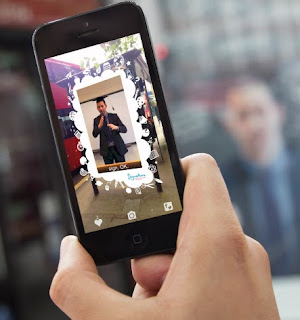
Image via Blippar
Definition: Augmented reality is a view of a real world object or environment whose elements are augmented (or supplemented) by computer generated graphics, sounds, video or other data.

AR is not new, per se. We see it on TV when we watch a football game and the network artificially places graphics on the field – like the line of scrimmage or the first down line. For years, Olympic coverage has super-imposed flags or athlete names on swimming or track lanes to give us more information to follow the action.

What’s different today, though, is the ubiquitous nature of smart phones in our world. You and over 5 billion of your closest friends now carry a mobile device that lets you launch an app, point it at an object and view of wealth of new information. Consider your reality henceforth augmented.

Meet Your Meat

Consider the following scenario:

You’re at the grocery store looking for some steaks to grill for the weekend. There are many options, cuts and brands. You want more information. You point your smart phone at the packaging label and before you more detail pops up, including when the steaks arrived at the store and who shipped them. In addition, a 3-D animation appears with audio to describe where the cow was raised and what it was fed. You can also learn about side dishes and wine pairings to serve with the steak.

AR is additional content to, ideally, enhance your view of the world. Think back to 1984 and cyborg assassin Arnold Schwarzenegger as the Terminator as he methodically sized up his opponent. In real time, data scrolls across his vision – his opponent’s height, weight, heart rate and background. Instead of appearing in your field of vision, though, AR data will appear in your mobile device.

For some great detail on AR, check out two recent compelling articles in Ars Technica by Lee Hutchinson – “Terminator-vision andthe complex questions behind ‘augmented reality’ ” and “Toss your manual overboard—augmented realityaims at big industry.”

Hutchinson does a nice job of differentiating augmented reality from its decades-old twin “virtual reality,” which required helmets, special glasses and expensive set up. He describes examples from today’s world, such as apps like Sky Guide that allow us point our phone at the sky and see the constellations.

The potential for AR growth is huge.  Hutchinson describes Google's app Word Lens that performs real time translations of visual signs or printed words. Comes in handy next time you’re in a foreign country.

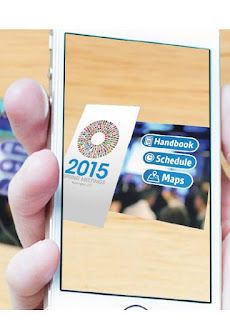
Image via Blippar
You can imagine that retailers are all over this. Beer ads will soon be jumping out from cases of Budweiser at the grocery store. Attractive, happy people will talk you through clothing options as you browse through the sweater collection at Banana Republic. You can bet augmented reality Disney characters will chat with you while you wait in line for 45 minutes before your Disney World ride.

Right Knowledge, Right Time

While the possibilities are endless, I think training has perhaps the most compelling and useful applications for augmented reality.

I work in the corporate learning field, and our constant challenge in training is to get people the specific knowledge they need for the task they are performing at the right moment they need it. This concept of  “performance support” could be greatly aided by augmented reality.

Consider, for example, instead of looking up a diagram on page 479 of a bulky Boeing jet engine manual, a mechanic points his mobile device at the engine to reveal a detailed 3-D rendering of all of the intricate parts. He can click on the parts for descriptions and review relevant instructions, ultimately improving his ability to fix the issue quickly and accurately.

The Future is Now


Qualcomm's Geoff Stead
It’s trippy stuff, but it’s not futuristic. It’s today. Last month, I attended a mobile learning conference in Austin, Texas run by the eLearning Guild. During one of the breakout sessions, Qualcomm’s Geoff Stead showcased a sample of AR featuring a Patent Wall at Qualcomm’s headquarters. By viewing the wall through your mobile phone, you have access to detailed information about each of Qualcomm’s many technology patents.

Software vendors like Blippar are already hustling to show the value of augmented reality in the training and consumer markets. Personally, I think the upside is limited only by our imaginations. I can see bus signs embedded with AR technology so with a quick look through our phone, the sign reveals the schedule, but also a map of where the next bus currently is along with the traffic situation.

Personalization with augmented reality is appealing, but there’s a line where it starts to get scary.

Imagine you launch your bank app and discover your checking account balance is low. Payday is 12 days away and your bills are all due soon. As a result, a video pops up before you to pitch a home equity loan.

As we continue to show our personal preferences through Facebook “likes,” via Twitter tweets and information we include on Linked In, how will this data from our social media profile intersect with augmented reality? What customized messages will it generate?

It’s not quite clear yet, but while after 50 years Deadheads appear to have ended their long, strange trip, I’d suggest that ours next journey is about to begin.


Monday, July 6, 2015

The Exceptional Benefits of Mistakes

When England’s Laura Bassett kicked the soccer ball into her own team’s goal last week, England lost its Women’s World Cup semi-final match to Japan.

It was a mistake. She’d attempted to kick the ball away, of course, but the ball went left off her foot instead of right and snuck past England’s goalkeeper. Bassett wept. Her teammates hung their heads. Soccer fans throughout England were crushed.

Through all this sadness and disappointment, there’s something for us to learn. As an educator, I think there’s tremendous value in mistakes of all shapes and sizes. I maintain that every mistake can be viewed as a positive because it reveals a little bit of the truth.

If we’re solving a problem, a few solid mistakes lay the path to the solution. This morning I was conscious of the truth-revealing nature of mistakes as I dropped my two young daughters off for the first day of their one-week technology camp called “Adventures in Robotics.”

The Debugging Philosophy

During the camp, which is run by the California-based company ID Tech and held on the Evanston campus of Northwestern University, I’m hoping that my girls make hundreds of mistakes, perhaps even thousands, as they learn how to create computer programs to bring small robots to life.

Part of what they’ll learn is how to debug the instructions they type into a computer. If the program does not work properly, they’ll have to figure out why, fix it and try again.

Seymour Papert
No educator has spoken more persistently and eloquently about the value of mistakes in learning and adopting a “debugging philosophy” than mathematician and Massachusetts Institute of Technology professor Seymour Papert. For decades, the now 87-year-old Papert has argued that schools have given the word “mistake” a bad name. He explains this in his 1980 book “Mindstorms” (subtitled “Children, Computers and Powerful Ideas”).

“The ethic of school has rubbed off too well. What we see as a good program with a small bug, the child sees as ‘wrong,’ ‘bad,’ ‘a mistake.’ School teaches that errors are bad; the last thing one wants to do is to pore over them, dwell on them, or think about them,” Papert writes.

He continues in his book, “The child is glad to take advantage of the computer’s ability to erase it all without any trace for anyone to see. The debugging philosophy suggests an opposite attitude. Errors benefit us because they lead us to study what happened, to understand what went wrong, and, through understanding, to fix it. Experience with computer programming leads children more effectively than any other activity to ‘believe in’ debugging.”

In 1999, I had the good fortune of taking a class with Papert at MIT while I was attending the Harvard Graduate School of Education. The class had no tests, no assignments and no textbooks. Instead, led by Papert’s questions, we spent each class discussing and debating ideas and talking through how people solve problems. It was marvelous.

“Everyone learns from mistakes”

My daughters this week will have a bit more structure in class. Their teacher, whom I met this morning, goes by Dr. Beats (aka Nathan) and studied robotic engineering at Worcester Polytechnic Institute. He will be introducing the class to LEGO Mindstorms’ robotic platform to teach them how to use motors, sensors and computer programs to create robots.
ID Tech's Dr. Beats

LEGO Mindstorms was developed through a partnership between the MIT Media Lab and LEGO. The origins go back to Papert. In the 1960s, Papert co-developed a programming language called LOGO aimed at improving the way children think and solve problems. LOGO allowed a small turtle robot to draw line graphics based on simple computer commands. It encouraged exploration and experimentation by both the students and teachers. To Papert, this is key.

“Some people who observe the children’s growing tolerance for their ‘errors’ attribute the change of attitude to the LOGO teachers who are matter-of-fact and uncritical in the presence of programs the child sees as ‘wrong,’ ” Papert writes.  “I think that there is something more fundamental going on. In the LOGO environment, children learn that the teacher too is a learner, and that everyone learns from mistakes.”

A Glimpse of the Future

In addition to making mistakes and learning from them, I hope this week my girls have fun and develop confidence in their ability to solve problems. As a parent, though, I must confess an ulterior motive. If this experience happens to ignite a spark that leads either or both of them to a future interest in computer science, that will be just fine.

I am keenly aware that as my girls reach college in 10 years and then begin their job search, computer science jobs will be abundant. In fact, over the next 10 years, there will be 1 million more computer jobs than students to fill them. Moreover, of the 6 industries expected to grow the most by 2020 (just 5 years away), technology pays the highest at an average of $78,730 a year. (See an infographic created by the Computer Science Zone.)

Credit: computersciencezone.org
The reality is that our schools are not doing enough to prepare students for these jobs. Today, 9 of 10 high schools in the U.S. don’t offer computer science classes. In addition, girls continue to not choose computer science as a major or as a career as well. Of all the computer science graduates today, only 12% are women.

So, while Laura Bassett’s mistake was on a big stage in front of millions of viewers, perhaps it also offers a glimmer of the truth. Maybe, as some soccer analysts have suggested, she was out of position slightly, allowing her opponent to get past her at a critical moment. She tried to adjust, made an error and no doubt has learned a valuable (and difficult) lesson.

During this week and well beyond, I can only hope the same for my daughters.


Friday, June 26, 2015

Sex or Mobile Phones: What's More Important to Us?

To us humans, it appears sex is more important than our mobile phones.

This is good news for the survival and general well being of the human race, but still a key question merits some exploration: “Just how important are mobile phones to us humans?”

Bank of America was curious about this question, so they partnered with a research company and interviewed 1,000 people, asking them basic questions related to mobile phones.

I Want My Phone Back

One question they asked was: If your phone was unexpectedly taken away, what would you be willing to give up to get it back? Nearly 80% of the respondents said they would give up either alcohol (45%) or chocolate (34%) to get it back.

They were more reluctant, however, to give up shopping (22%) or TV/movies (16%), and only 13% said they would give up sex to get their mobile phone back. So, an apparent victory for sex, you might say.


However, the study also found that even fewer people (8%) were willing to give up their car. While we still like sex and are reluctant to stop having it for our phones, sex is apparently less important than our car.

On a practical level, this makes complete sense. It’s unclear, though, whether people are willing to give up having sex in their cars to get their phones back. This question, it appears, was not asked.

Incidentally, the data on chocolate showed that women were much less likely to give up chocolate than men. A mere 27% of women were willing to part with chocolate, but 42% of men were fine with chocolate abstinence. It’s worth noting that no such gender breakdown was provided on the willingness to give up sex.

Your Hygiene or Your Phone?

Clearly phones are important to people. We’d give up guilty pleasures to reclaim them. But how does the phone rank against life’s basics? Is the mobile phone the most important item in our daily lives?

The answer is, in fact, yes. According to the bank’s study, for 18-24 year olds specifically, mobile phones ranked highest among all “life’s basic” options at 96%, edging out staples like the toothbrush (93%) and deodorant (90%). For this age range, mobile phones appear more important than personal hygiene, which could be a good thing to know.

But you can’t say it’s a generational thing. For all study respondents, nearly 50% felt they could not last more than one day without their phone. Of that group 13% said they could not be without their phone for more than one hour. These folks are what the study called “compulsive checkers.”  Another 34%, who the study said felt “naked without their phone,” confessed that they couldn’t go more than 24 hours without it.

Check, Check, and Re-Check…

How often each day do people actually check their phones? The bank’s study didn’t focused on this, but a 2015 Internet Trends report showed that on average people check their phones 150 times a day. (Incidentally, if you’re curious of your phone-checking habit, you can download an app that will track the number of times you check each day. Brilliant, right?)

Think about that for a second. Assume you’re awake 16 of the 24 hours. Checking your phone 150 times a day means doing it over 9 times per hour or roughly every six minutes. This alone speaks to our mobile phone addiction and informs the now popular acronym “FOMO” or “Fear of Missing Out.”

Today we fear that if we don’t check our phone – our pocket-sized gateway to social media, e-mail, news, texts and so much more – we could miss something important.  The fact that our urban dictionary includes a term like “FOMO” is evidence enough of the explosive growth of mobile phones in our world.

How explosive? Consider that mobile traffic in 2014 alone increased 69% over the prior year, according to the Internet Trends Report authored by research guru Mary Meeker.

Consider also the nearly 20-year growth of mobile phones. In 1995, just 80 million people – 1% of our global population – had a mobile phone. In 2014, that number has climbed to 5.2 billion or a whopping 73% of our global population.

I’d say that qualifies as a trend, wouldn’t you?

Numbers Don’t Lie

Mobile phones are big money, too. Facebook, for example, has 1.4 billion users, and of those 1.2 billion people access Facebook via mobile devices on a monthly basis.  An amazing 798 million people access Facebook every day via their mobile phones.

Mobile ads on Facebook account for nearly two-thirds of the company’s revenue. Twitter is even more mobile. Of its 302 million active users, 80% are mobile. In the first quarter 2015, 89% of Twitter’s revenue came from mobile ads.

The money explains why so many companies, like Bank of America for instance, want to understand the mobile habits of us humans. They want to know what we think, what we do and what we value so they can place their investment and advertising bets appropriately.

So, as we’ve established, the good news is that to most of us humans sex still trumps the mobile phone. Remember, though, that 13 percent of the study participants said they’d give up sex to get their phone back. That’s 130 people!

But please be aware that if that a certain special moment arises with that certain special someone in your life (cue the sexy, romantic music) and in that very moment your instinct is to pause first to check your phone, I would suggest that we as a race of people might be in serious trouble.

(Graph credits: Bank of America Study "Bank of America: Trends in Consumer Mobility Report, 2014)


Monday, June 1, 2015

Cozy Table for Two...iPads

You’ve probably seen this too. You’re at dinner – perhaps even a nice place. You’re enjoying the food, some wine, the conversation and then you spot people at a nearby table staring at their respective electronic devices.

Just last weekend in fact, I saw this. My wife and I were walking together along Main Street in downtown Ann Arbor, Michigan. It was a beautiful, warm evening. The sidewalk cafes were crowded with people, the air was filled with delicious smells of food. A street performer on guitar was also actually playing a fairly respectable version of the Talking Heads’ song “Psycho Killer.”

We were trying to decide where to eat. Those of you who have been up and down Main Street know the options abound. Seafood? Italian? Indian? French Bistro? As I peered into the window of a fairly high-end restaurant, I saw a couple seated at a white cloth covered table. The table was adorned with sparkling silverware, tall wine glasses with generous pours and directly in front of the man and the woman were dueling iPads.

"Let me look deep into your...screen."
I stopped, of course, to take a picture and to comment to my wife, “Check this out. A night out on the town to….play Candy Crush.”

Now, I honestly don’t know if they were playing Candy Crush or not. I didn’t get that close. I didn’t want to intrude on their moment together – one they were sharing by completely ignoring each other. Instead they were focusing with a somewhat lost, trance-like gaze on their glowing, 64-bit 9.7-inch high resolution retinal displays.

I realize this is not a crime. Plenty of people, for example, sit in complete silence across from each other. They simply chew their food, say nothing, and take in the ambiance. The same result is accomplished, I suppose.

My question, though, is this: Are these amazing devices – smart phones, tablets and now watches – revolutionizing our world in just about every way imaginable and simultaneously destroying human social interaction?

I will refrain from hazarding an educated guess to this piercing question. Instead, I’ll simply suggest you go to Google (preferably when you are not out to dinner with someone) and type in “smart phones killing social interaction.”

You will see an array of results, including scholarly articles that are predictably hard to understand. You will see other articles that make the point that, yes, in fact these devices are electronic heroin. We’re addicted to them. We can’t do anything until we get our fix and we’re losing the ability to interact with others because, frankly, phones are just more important.

So, back to the couple at the window table in the fancy Ann Arbor restaurant. I’m thinking that they were Facebook friends and when they finally sat down together and realized that the other was an actual flesh and blood person, they both panicked, lunged for their iPads and logged in. Once their anxiety of being together “in person” subsided, they began exchanging messages with each other from across the three-foot-long table.

I’m thinking that it went like this:

Woman: (typing in the “What’s on your mind?” box) Wow. Menu looks amazing!
Man: (seeing her comment post in his newsfeed, he first “likes” it then he types) Totally. Thinking about appetizers. Do you like Carpaccio?
Woman: Hmmm. Not sure. What’s that? It is soup?
Man: No! OMG. It’s raw meat. Really yummy.
Woman: Gross! I’m a vegetarian. You don’t know me at all… L
Man: Sorry! But it wasn’t on your profile. So I assumed…
Woman: Whatever. I’m jumping over to Twitter.

Potential Solution

Clearly, this is bad, but don’t despair because I think I have an answer. I thought of this the other day, so it’s not totally worked out.

Let’s assume, though, 10 more years go by and more and more people lose the ability to interact with real live people. My observation is not scientific, but what I see in the world is people walking, sitting, and standing while simultaneously they are both peering at their phones and listening with their ear buds snuggly nestled in their ears.
"So glad we have this time to catch up....on Facebook."


I say let’s develop an app that can read social situations. It will take in both auditory and visual information. This data will be routed to a cloud database where it will be subject to analysis, sophisticated parsing techniques and feedback algorithms. In essentially “real time” the app will provide us instructions through our earphones that tell us what we’re supposed to say and do.

So, if at dinner for example, two people are logged into the app at the same time, then, voila, they will be having what historically has been called “a conversation” in two shakes of a lamb’s tail.

For instance, we may struggle to know how to respond to a question like, “How are you?” To help with this, the app’s synthesized voice will provide us with lines, a la Cyrano de Debergerac, without missing a beat so that we can reply with , for example, “Pretty good. Thank you” in our very own calm, human voice.


I’m excited about this. I’m thinking a good name might be something like “iHuman” or “iCanTalk.” Maybe “iHaveBrain” is too sarcastic. But it’s catchy, don’t you think?

Thursday, May 7, 2015

The Perils of "Live" Learning


Recently I was staring at my computer screen waiting for a live interview to begin. It was 1 p.m. and the interview was with Salman Khan, the founder of Khan Academy.

I was intrigued about this interview for two reasons. The first reason:  I’m a big fan. Khan, the 38-year-old founder of Khan Academy, is a pioneer and many regard him as a leading thinker in education. I read his 2012 book, “The One World School House” and found it inspiring. I was interested in what he was going to say during this one-hour interview.

The second reason I was intrigued was that the interview was live. I found this, well, ironic. Dating back to 2003, Khan has recorded over 5,000 videos and created exercises on a wide range of topics that are all delivered via YouTube for people to consume wherever and whenever they want. Time and place are not a factor – which is a big part of what’s made his approach to learning so revolutionary and effective. So, the idea of a “live interview” with Khan seemed not only odd, but also kind of unnecessary.

 KZO Innovation's "live" interview with Sal Khan
1:08 p.m. Still nothing. I’m wolfing down a plate of mini-carrots and hummus because I skipped lunch to fit in a conference call. Now I’m staring at a screen of old fashion TV color bars and the words on the screen read, “offline.” That’s it.

I grumble, still amused by the irony at hand. I instant message a colleague of mine in Texas to make sure I don’t have the wrong link. He quickly confirms he’s staring at nothing as well. We’re both waiting and we aren't alone. The Twitter feed embedded into this interview launch screen is popping with Tweets – questions like, “What’s happening?” “Is there a problem?” “Does anyone hear anything?” All very logical questions.

Biting into a mini carrot, I wonder how they heck they make these carrots so small. Do they pull them out of the dirt early or do they cut them up and shave them down? I honestly don’t know. I also wonder what it must be like at K-ZO Innovations, the Reston, Virginia company running this live – yet to be aired – event.  They must be totally freaking out.  Almost 10 minutes in and it’s complete crickets.   Finally, K-ZO, a technology company that delivers video via the web, sends an e-mail stating that they are having technical difficulties and that the event will begin  “shortly.”

I'm annoyed, but decide to stick it out. After all, it’s Sal Khan – king of the recorded lesson, the guy who has over 15 million students watch his videos and take over 4 million lessons every single day. It’s a compelling model not simply because of the convenience of learning at your own time, but also your level and your own pace.

I think of how teachers in live classrooms struggle to meet the needs to students on the high ability end and the low ability end at the same time. With 25-30 kids, it’s hard to reach them all. But through his videos, lessons, feedback and tracking, Khan's system does this really well.

There is also no stigma for students of asking the teacher to repeat something because they don’t "get it." It’s a video. They can rewind and watch again. They take the lesson again until they get it right. They spend as much time as they want and then move onto another lesson that follows or select a different one that intrigues them.

What they do on Khan Academy is done on their own time, outside of school – and in their own language.  Khan’s approach has been proven to boost student performance – both when it's used in a school setting and outside of school.

Oh, one additional thing. It's all free.

1:10 p.m. Scraping the last hummus from my plate with a nub of baby carrot, I chuckle at the Tweet by learning luminary Allison Rossett as she replies, “What exactly do they mean by ‘Soon?”  We all wait until finally, K-ZO Innovations lets us all know they are pulling the plug on “live” and will send out a recording in a few hours.

It was as it should be. Much more convenient. Whatever happened was a colossal collapse and quite embarrassing for a company that delivers video via the web. To K-ZO's credit, though, they were humble, contrite and quickly churned out a white paper detailing the event, calling it, "When Live Goes Wrong." I will say, I really like their approach using video for learning, by the way. Very smart design. These guys appear to have something compelling.

As I was watching the recorded interview of Khan, of course I was impressed with him. Video is powerful. It's can work on the job and in schools. Hearing him talk, my mind kept going back to a recent meeting I attended at my daughters’ elementary school. The district’s superintendent, on the job less than a year, had just finished talking to about 30 parents in the school’s library about the painful $2.2 million in cuts they were planning for next year.

Salary costs are rising along with transportation costs and other operating expenses. Meanwhile, revenues are not keeping pace. Unless something changes, the deficit in our relatively small 17-school district will climb to nearly $9 million in 4 years. This was not happy news to me, a parent of a 9 and 6-year-old.

A parent seated behind me asked the superintendent: “How does the district plan to use technology?” The superintendent, who is a bright, caring guy doing a very good job thus far,  provided a “we’re open to ideas…” answer. I thought of Khan, his 5,000 videos, lessons and quizzes and scribbled in my notebook, “Send link to recorded "live" interview to superintendent.”

Clearly a future in which our education system more fully embraces technology needs to come sooner rather than later. Thoughtful, integrated, well-executed technology has stopped being a “nice to have” in schools. Universities have gotten the message – at least some have. Businesses have known this for a long time.


Even at the elementary level, a blended-learning approach, combining technology with live classroom instruction – needs to start being simply how children today learn.